
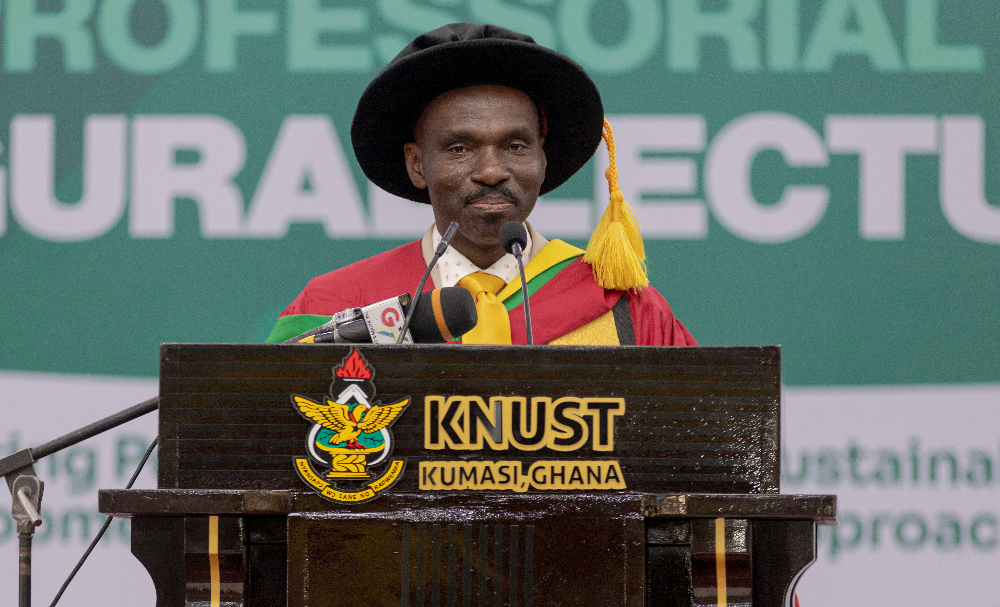
Professor Prince Osei-Wusu Adjei, a development geographer and expert in decentralisation, local governance and social policy, has called for a shift in Ghana’s poverty reduction strategy, urging policymakers to move beyond cash transfers to what he describes as the “Basic Means Approach.”
Delivering his inaugural lecture titled “Eradicating Poverty in the Age of Sustainable Development: The Basic Means Approach,” Prof. Osei-Wusu Adjei argued that sustainable poverty reduction requires identifying, providing and strengthening the essential resources poor and vulnerable people need to pursue productive livelihoods.
“Poverty has become a global scourge and a global canker,” he stated. “Poverty issues are now on top of the global agenda, and poverty eradication must be treated as a global responsibility.”
He said that although successive governments have introduced macro- and micro-economic interventions since the 1980s, many have failed to produce lasting results.
Prof. Osei-Wusu Adjei maintained that poverty reduction efforts must prioritise access to productive assets such as land, finance, skills, technology and innovation, rather than relying heavily on cash-based interventions.
“The effective way to eradicate poverty is by identifying, providing and strengthening the means required by the poor and vulnerable to engage in productive livelihood activities and derive their desired livelihood outcomes, including asset mobilisation,” he emphasized.
A key focus of the lecture was the gendered dimension of poverty. He noted that poverty in Ghana disproportionately affects women, particularly in rural areas, despite gains in educational attainment.
“Without planned policy and affirmative action in our institutions and economic and political sectors, mere improvement in women’s educational attainment will not automatically guarantee economic participation and political empowerment,” he said.
Citing research on the gender dimensions of poverty, he said women are more likely to have limited access to productive assets, engage in unpaid domestic labour and face discrimination in beneficiary arrangements. He commended recent reforms aimed at improving women’s representation in governance, describing them as “a step in the right direction.”
Prof. Osei-Wusu Adjei further described poverty in Ghana as predominantly rural, linking it to declining agricultural productivity and rising rural–urban migration. Drawing on research conducted across rural districts in Ghana and other African countries, he said many communities have experienced limited transformation over decades.
“In fact, poverty is a rural phenomenon,” he stated. “If no pragmatic rural poverty reduction interventions are implemented, the dream of ending poverty in all its forms by 2030 will remain a mirage.”
He warned that continued rural depopulation threatens food security and contributes to urban congestion, rising urban poverty and social instability.
Prof. Osei-Wusu Adjei advocated gender-sensitive interventions and comprehensive rural development policies to advance Sustainable Development Goals (SDGs) 1 and 5. He stressed that structural and situational factors, including limited access to productive assets and low levels of education and training, are more significant drivers of poverty than narratives that blame the poor.
“Women and men experience poverty differently, with different capacities to cope with or escape from it. Gender-sensitive interventions are therefore critical for optimising poverty reduction,” he said.
He also urged young people to pursue not only academic excellence but also economic and political empowerment to avoid poverty traps.
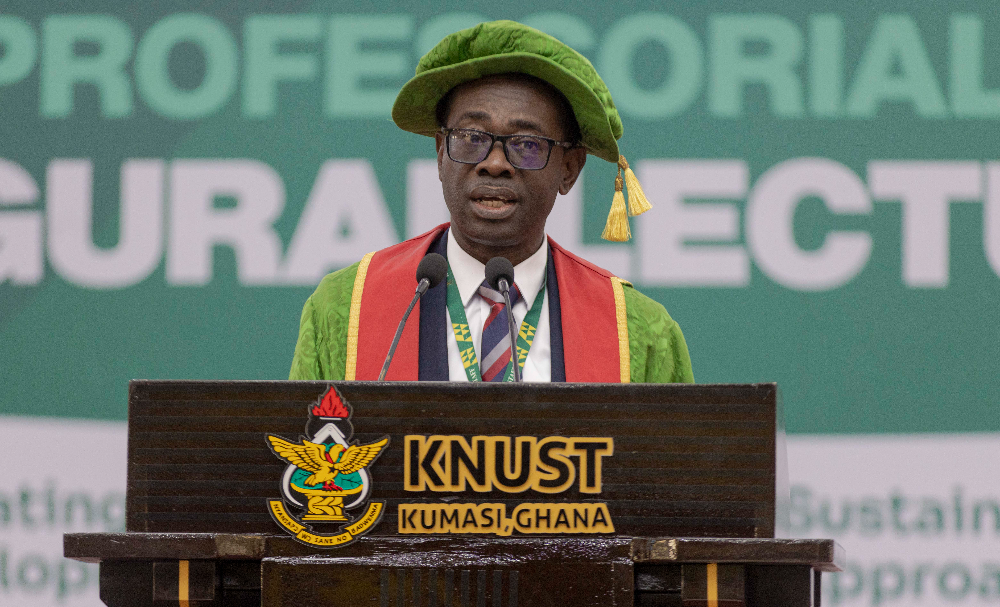
Mr. Benjamin Boampong Owusu, Registrar of the Kwame Nkrumah University of Science and Technology (KNUST), said inaugural lectures provide a platform for newly appointed professors to present their scholarly contributions and engage the academic community. He noted that such lectures align with the University’s mission to address societal challenges through research and innovation.
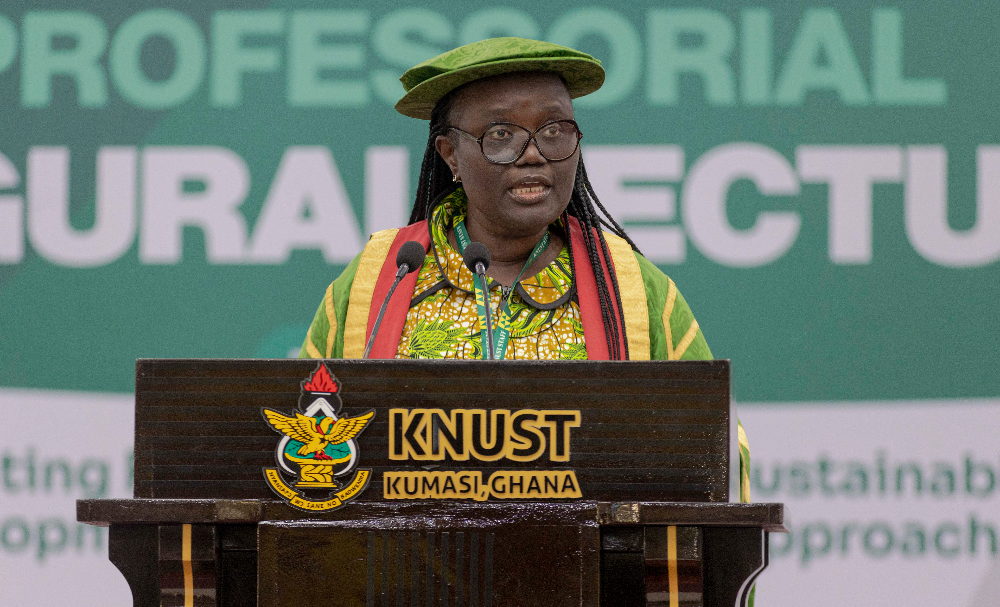
The Vice-Chancellor, Professor (Mrs.) Rita Akosua Dickson, reaffirmed the University’s commitment to academic excellence, innovation and ethical leadership.
“Our vision is to position KNUST as a leading global institution that not only imparts knowledge but also generates transformative solutions to address national and global challenges,” she said.


